
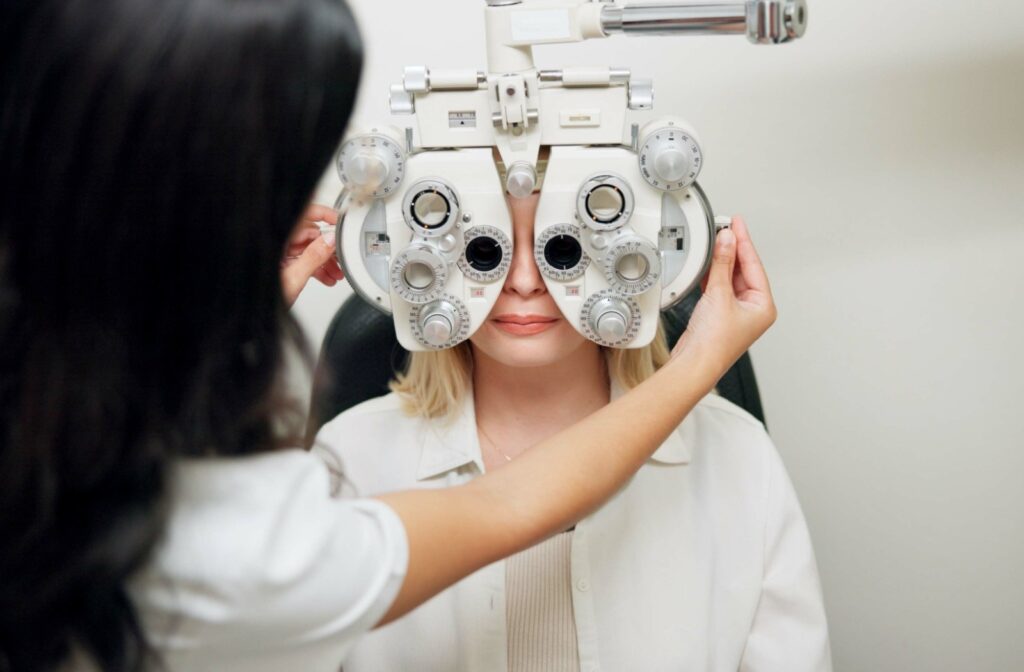
You might think an eye exam just checks if you need glasses, but there’s so much more happening during your visit. Your eyes are the only place in your body where an eye doctor can see your blood vessels noninvasively, which can give them valuable clues about your overall health.
A comprehensive eye exam is a thorough evaluation that examines your vision, eye health, and can help detect early signs of eye diseases and other health conditions, often before you notice any symptoms. At Murdoch & Macnab Doctors of Optometry, our team uses eye exams, including innovative technology and detailed testing, to create a complete picture of your eye health and vision needs.
What Happens During Your Eye Exam
Health History and Vision Concerns Review
Your exam can start with a conversation about your overall health background and any vision changes you’ve noticed. The eye doctor may ask about current medications that might affect your eyes and can discuss any family history of eye diseases like glaucoma or macular degeneration with you.
This discussion helps identify your risk factors and can guide the eye doctor through the rest of your exam. You can also share any concerns about eye strain, dry eye, or changes in your vision quality, which our team is experienced in diagnosing and treating.
Visual Acuity and Prescription Testing
If you’ve had an eye exam before, you might be familiar with the eye chart reading that comes next, but it goes beyond simple letter identification. You can read charts at different distances to test how clearly you see both at a distance and up close.
If you currently wear glasses or contacts, the eye doctor can check whether your prescription still works well for your daily activities. A focus test or eye coordination evaluation helps check whether both eyes work together smoothly when you read, drive, or use computers.
Eye Pressure Testing and Wide-Field Imaging
Modern eye pressure testing has innovated beyond a sudden puff of air hitting your eyes. Checking your eye pressure is important, as this gentle measurement helps assess risk factors and detect early signs of glaucoma. This eye disease can develop quietly, often without you noticing any early symptoms, making eye exams a key part of protecting your vision.
Wide-field retinal imaging captures detailed images of the back of your eye (the retina), creating digital records that can help the eye doctor track changes over time. This technology can help the eye doctor spot problems in areas you can’t see or feel.
Early Screening for Eye Diseases
Your comprehensive exam screens for common eye conditions that can develop without causing early symptoms. The eye doctor can examine your optic nerve (which sends signals to the brain), retina (the back of the eye), and other eye structures using specialized equipment.
This early screening can detect problems early, when treatment may be more effective. You’ll receive a complete picture of your eye health status during each visit.
Discussion and Recommendations Tailored to Your Needs
After completing all testing, the eye doctor can discuss findings and create recommendations based on your specific lifestyle and vision needs. This includes guidance for glasses, contacts, or other treatments that can help with visual quality and comfort throughout your daily activities.
You can receive clear explanations about any changes in your eye health and understand the next steps for maintaining good vision. Our team also provides contact lens exams, which are specialized fittings when contacts suit your lifestyle better than glasses.
Eye Health Conditions Your Exam Can Detect

Common Eye Diseases
Glaucoma often develops without symptoms until significant vision loss occurs. Your comprehensive exam can measure eye pressure and examine the optic nerve to detect this condition early, when treatment is more effective.
Macular degeneration affects central vision but starts with slow changes in retinal tissue. The detailed examination performed during an eye exam can detect early signs, helping your eye care team monitor the progression and talk about your options for treatment.
Health Conditions
Diabetes affects blood vessels throughout your body, including the tiny vessels in your eyes. Your optometrist can notice these changes during the retinal examination, sometimes before you experience other diabetes symptoms.
High blood pressure leaves visible signs in your eye’s blood vessels, and cholesterol deposits can appear in various eye structures. These findings help you understand your overall health and may indicate the need for further evaluation by your primary care provider.
Difference Between a Vision Screening and an Eye Exam
Beyond Basic Vision Screening
You may have had a vision screening when you went to get your driver’s license. While helpful for a general sense of how clearly you see, a basic vision screening only checks if you can see clearly at different distances.
On the other hand, your comprehensive eye exam assesses key structures of your eye, from the front surface to the optic nerve. Eye disease detection can sometimes happen before symptoms appear, which means that treatment can be started earlier. The technology-enhanced assessment provides information that simple vision testing can’t capture.
How Often Do I Need an Eye Exam?
Though everyone is different, there are some general guidelines to follow based on age.
Children and Teenagers
Children and teens may benefit from annual eye exams because their eyes are still growing, so their vision can change quickly. Many eye conditions develop during childhood, and early detection can help prevent difficulties with learning or sports.
Adults and Seniors
Healthy adults aged 20 to 64 are often recommended to schedule an eye exam every 2 years, even if their vision seems fine. After age 65, an annual eye exam is often recommended because age-related eye conditions become more common.
Special Circumstances Requiring More Visits
If you have a family history of eye disease, including glaucoma or age-related macular degeneration, your eye doctor may recommend a personalized schedule to monitor your eye health.
You may also need more eye exams if you have diabetes, high blood pressure, and other health conditions. This is important because these health conditions can affect your eyes, requiring more frequent comprehensive eye exams to catch changes early.
Schedule Your Comprehensive Eye Exam
At Murdoch & Macnab Doctors of Optometry, our team puts your vision and comfort first, combining technology with personalized attention to help support your eye health for years to come. Schedule your comprehensive eye exam today and discover the difference thorough, professional eye care makes.