
You’re reading this screen clearly, but when you look up at the clock across the room, everything turns blurry. Or maybe you can see that distant clock just fine, but this text looks fuzzy without your reading glasses. These everyday experiences point to two common vision conditions that affect millions of people.
Myopia makes distant objects blurry while close objects typically stay clear, and hyperopia does the opposite: making nearby objects harder to see than distant ones. Both conditions stem from how light focuses in your eyes, and both can be corrected. Our team at Murdoch & Macnab Doctors of Optometry provides comprehensive eye exams to help you see clearly at all distances.
What Are Myopia and Hyperopia?
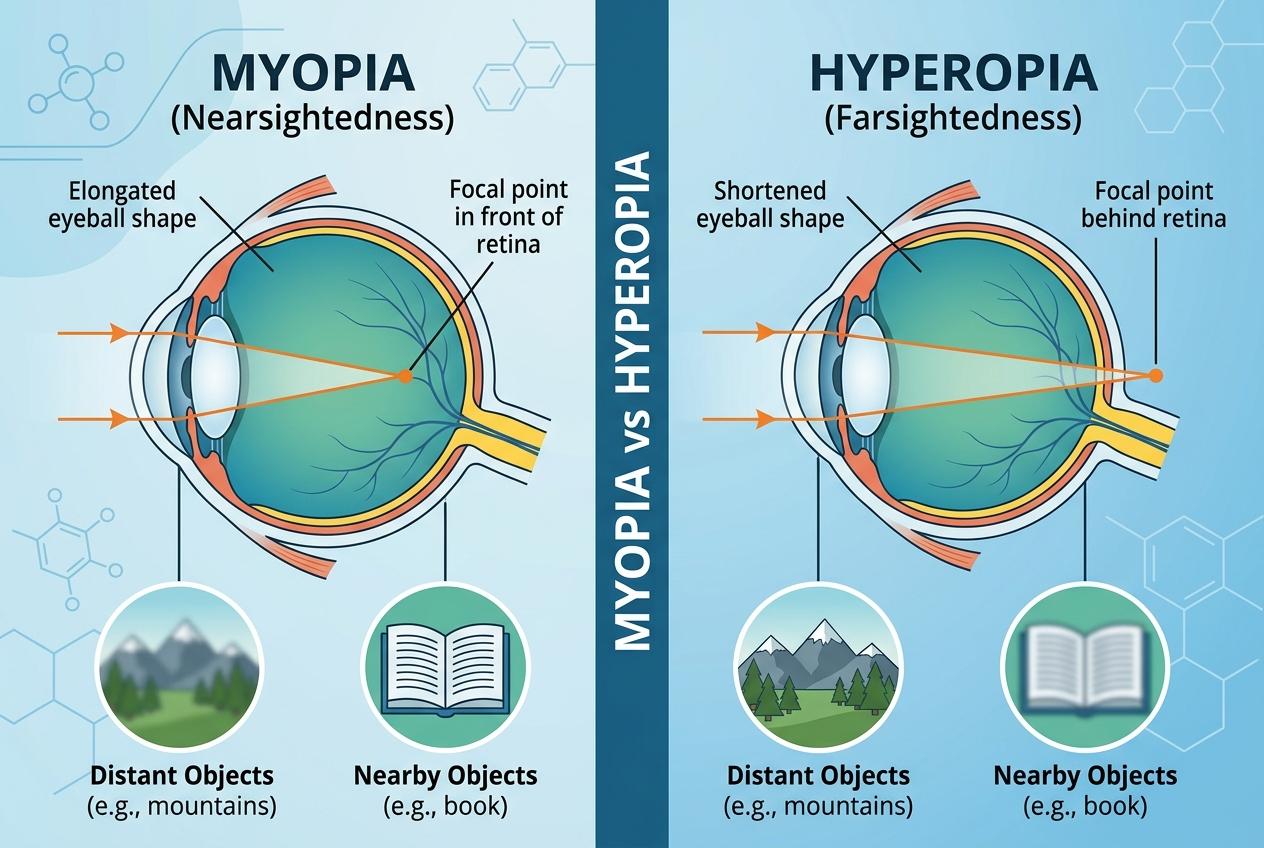
Myopia, commonly called nearsightedness, means you typically see nearby objects clearly, but distant objects appear blurry. When you have myopia, you can usually read a book without trouble, but street signs become hard to make out until you get closer.
Hyperopia works the other way around. Also known as farsightedness, this condition makes distant objects clearer than close ones. You might see a building across the street perfectly, but reading a menu or your phone requires holding it at arm’s length.
Both conditions are refractive errors, problems with how your eye bends light. They’re incredibly common and affect people of all ages, from young children to seniors.
Key Differences Between These Vision Conditions
How Light Focuses in Your Eye
Your eye works like a camera, focusing light rays onto the retina at the back of your eye. When everything works perfectly, light focuses directly on the retina, creating clear vision at all distances.
With myopia, light focuses in front of the retina instead of on it. This happens because your eyeball is slightly longer than normal, or your cornea curves too steeply.
Hyperopia creates the opposite problem. Light tries to focus behind the retina, usually because your eyeball is shorter than normal or your cornea doesn’t curve enough.
What You May Notice with Each Condition
Myopia symptoms can include:
- Squinting when you try to see distant objects
- Headaches after activities like driving
- Eye strain from constantly trying to focus
- Moving closer to the TV or having trouble seeing the board at work presentations
Hyperopia brings different challenges. You may notice:
- Blurry vision when reading or doing close work
- Tired eyes after spending time on detailed tasks
- Difficulty focusing on your phone or computer screen
Children might show these conditions differently from adults. A child with myopia might sit very close to the TV, while a child with hyperopia might avoid reading or complain that their eyes hurt during homework. Children’s eye exams can help detect these issues early.
What Contributes to These Vision Problems
The shape of your eye plays the biggest role in the development of myopia or hyperopia. If your eye grows longer than average, you’ll likely become nearsighted. If it stays shorter than typical, farsightedness often develops.
Family history strongly influences whether you’ll develop these conditions. If your parents wear glasses for distance or reading, you are more likely to need vision correction too.
Your environment and habits can also play a role, especially with myopia. Spending a lot of time on close work, such as reading, computer use, or phone scrolling, may contribute to nearsightedness, particularly in children and teens. Playing outdoors can help maintain children’s eyesight and reduce myopia risk.
How Your Eye Doctor Can Identify Each Condition
Comprehensive Eye Exams
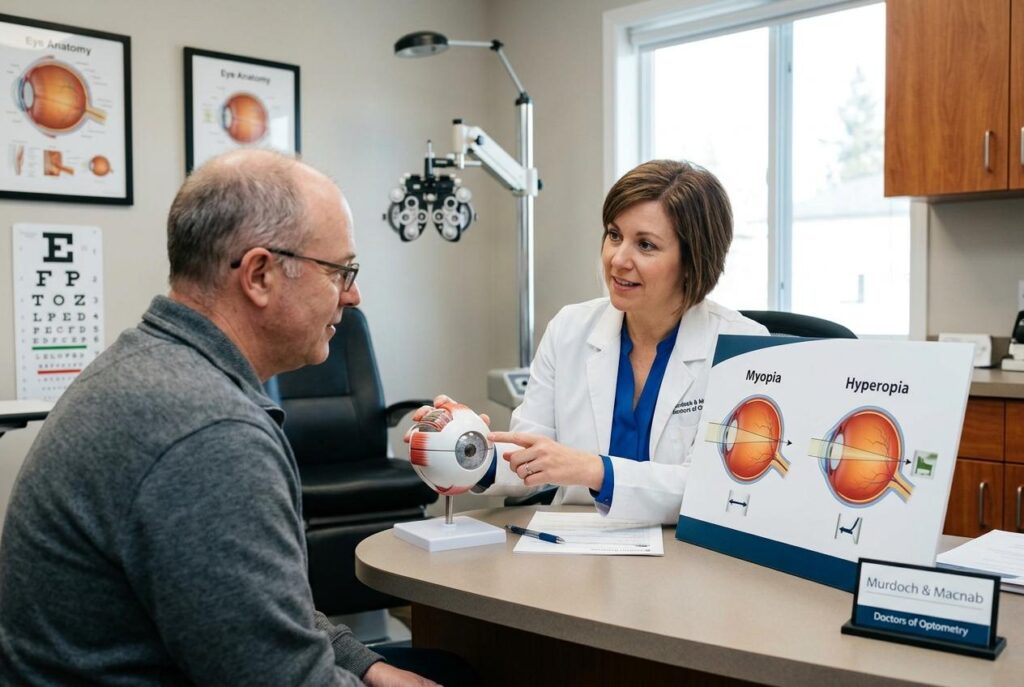
Your eye doctor starts with visual acuity testing, those familiar eye charts that measure how clearly you see at different distances. You’ll read letters or symbols from across the room and up close to pinpoint where your vision struggles.
Refraction testing typically comes next. Your eye doctor uses different lenses to find the exact prescription that gives you clear vision. This process shows whether you need correction for distance, close work, or both.
A complete eye health evaluation looks beyond just vision clarity. The eye doctor examines the internal structures of your eyes to make sure they’re healthy and functioning properly. Comprehensive eye exams are important for detecting eye diseases early.
Why Regular Eye Exams Matter
Early detection helps prevent vision problems from getting worse over time. When caught early, many issues can be managed more effectively.
Children need annual eye exams because their vision changes rapidly as they grow. Catching myopia or hyperopia early in childhood helps support proper visual development and academic success.
Adults should have comprehensive eye exams every 2 years, or more often if they already wear corrective lenses. Your prescription can change gradually, and regular check-ups keep your vision sharp.
Treatment Options for Myopia and Hyperopia
Glasses remain the most popular choice for correcting both myopia and hyperopia. Modern lenses are thinner and lighter than ever, providing clear, comfortable vision correction for daily activities.
Contact lenses offer freedom from frames while giving you a wider field of clear vision. They’re particularly helpful for sports, outdoor activities, or when you prefer the convenience of lens-free living.
Specialized myopia control treatments help slow the progression of nearsightedness in children. These approaches can reduce how much a child’s prescription increases over time.
Getting the Right Fit
Professional fitting helps your corrective lenses work effectively and feel comfortable throughout the day. Whether you choose glasses or contacts, proper fitting makes a significant difference in your experience.
Regular follow-up appointments help monitor changes in your prescription and overall eye health. Your vision needs can shift over time, and staying current with adjustments keeps you seeing clearly.
See Life Clearly
Whether you’re dealing with myopia, hyperopia, or other vision concerns, Murdoch & Macnab Doctors of Optometry can help you find the right solution. Contact our team to schedule your comprehensive eye exam and discover how clear, comfortable vision can improve your daily life.