
You may have noticed your child squinting at the TV or moving closer to read homework. When myopia develops in children, many parents wonder if there’s more they can do beyond regular glasses to slow the progression of their child’s prescription. Our team at Murdoch & Macnab Doctors of Optometry helps families understand their options when myopia begins to affect their child’s daily activities and long-term eye health.
MiSight contact lenses use specialized dual-focus technology to slow myopia progression, offering children clearer vision today while helping protect their long-term eye health.
What Makes MiSight Contact Lenses Different
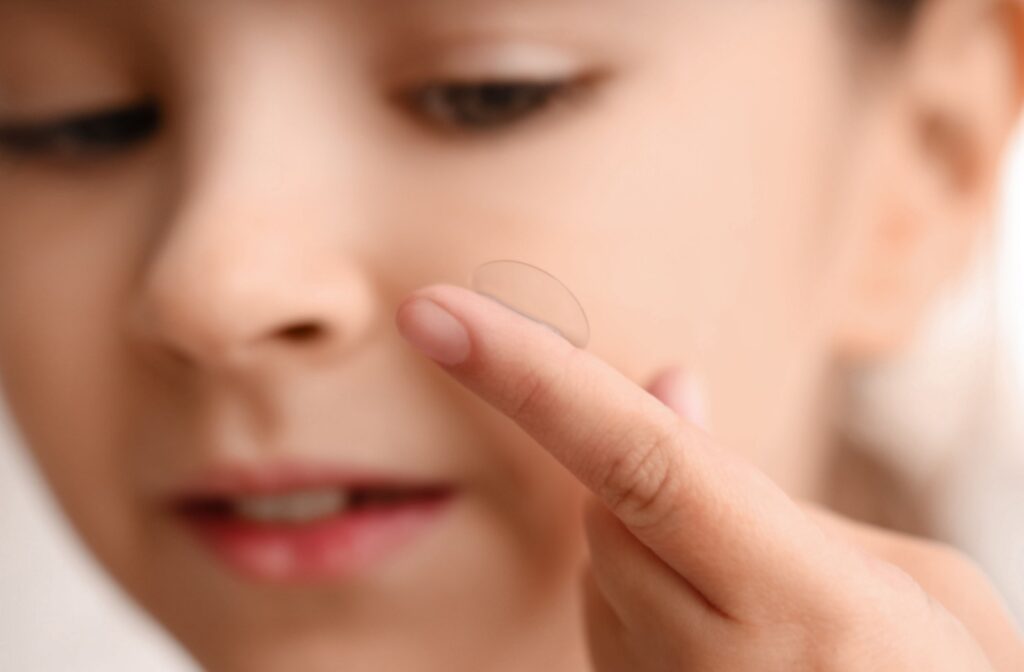
MiSight contacts work differently from regular contact lenses or glasses. They feature 2 distinct vision zones built into each lens: One corrects your child’s current myopia, while the other creates a pattern of light that may help influence eye growth.
MiSight contacts are daily disposable lenses, which means your child gets a fresh, sterile pair every morning. This is often convenient for busy families or younger children, as you don’t need to worry about cleaning solutions or storage cases in which bacteria or protein deposits can build up. The safety benefits of proper contact lens care become much simpler with daily disposables.
The lenses are designed specifically for children’s active lifestyles. Your child can play sports and move freely without glasses slipping or breaking.
How MiSight Slows Your Child’s Myopia
The Science Behind Myopia Control
Myopia develops when the eye grows too long from front to back, causing distant objects to appear blurry. That’s why it’s often more common in children, because their eyes are still growing. MiSight lenses create controlled peripheral (side) defocus, which is a specific pattern of light that signals the eye to slow this growth.
The central zone of each lens provides clear distance vision for daily activities, so your child doesn’t miss a thing. Meanwhile, the surrounding treatment zones work continuously to modify the growth signals your child’s eyes receive.
This dual approach helps your child see clearly, while the lens is designed to help slow myopia progression when worn consistently.
Clinical Results
Clinical studies followed children for 3 years and found that MiSight lenses slowed myopia progression by 59% on average compared with regular single-vision lenses.
The research tracked hundreds of children across multiple locations, providing data on long-term effectiveness. Children who used MiSight consistently showed sustained benefits throughout the study period.
These results suggest that starting myopia control early can help reduce your child’s final prescription strength, potentially lowering their risk of future eye complications. This is important, as research shows that high myopia increases risks for serious eye conditions later in life.
Daily Life with MiSight Contacts
Comfort and Convenience Features
MiSight lenses use a soft hydrogel material that allows oxygen to reach your child’s eyes. This helps maintain healthy, comfortable eyes even during long school days.
Each morning, your child simply puts in a fresh pair of lenses. At bedtime, they throw the used lenses away: No cleaning, storing, or maintenance required.
The daily replacement schedule can help reduce the risk of infection because bacteria and protein deposits don’t have as much time to build up on the lens surface. Proper contact lens hygiene becomes much more manageable with these daily disposables.
Recommended Wearing Schedule
Your child should wear MiSight lenses consistently throughout the day, as recommended by your eye doctor, to achieve the full myopia-control benefits. This typically covers the school day plus afternoon activities.
Consistent daily wear helps achieve the desired effect. The lenses are more effective when worn regularly, not just occasionally.
Your child must remove the lenses before sleep since they’re designed for daytime wear only. This gives the eyes time to rest and receive oxygen naturally overnight.

Who Benefits from MiSight Treatment
MiSight lenses are often prescribed to children between the ages of 8 and 12. Children with progressive myopia (where the prescription keeps getting stronger each year) may benefit the most from MiSight treatment. Regular children’s eye exams help identify these patterns early.
Maturity with Contact Lenses
Though daily disposables carry less risk, your child still needs to be mature enough to handle contact lenses safely and follow proper hygiene practices. The eye doctor can assess whether your child is ready to wear contact lenses during the consultation. Outdoor time and lifestyle choices also influence myopia management success.
Your Journey with Professional Myopia Care
Comprehensive Assessment Process
The eye doctor can measure your child’s current prescription and track how quickly myopia has been progressing. They may ask you about your family history and lifestyle factors to help create a complete picture of your child’s myopia risk and treatment needs. This baseline information helps determine if MiSight lenses are the right choice for your family.
A detailed contact lens fitting helps the lenses sit properly on your child’s eyes for both comfort and effectiveness. A member of our team can also teach your child proper insertion, removal, and hygiene techniques.
Ongoing Support and Monitoring
Regular eye exams help track how well the treatment is working and help the eye doctor to adjust it, if needed. As your child grows, the prescription may need fine-tuning to stay in control of myopia progression. This long-term follow-up helps protect your child’s vision for years to come, giving you confidence in their eye health future.
Schedule Your Child’s Myopia Assessment
If you’re concerned about your child’s myopia progression, our experienced team at Murdoch & Macnab Doctors of Optometry in Saskatoon, Saskatchewan, can help you explore whether MiSight contact lenses are right for your family. Schedule a comprehensive myopia assessment and take the first step toward protecting your child’s vision.