

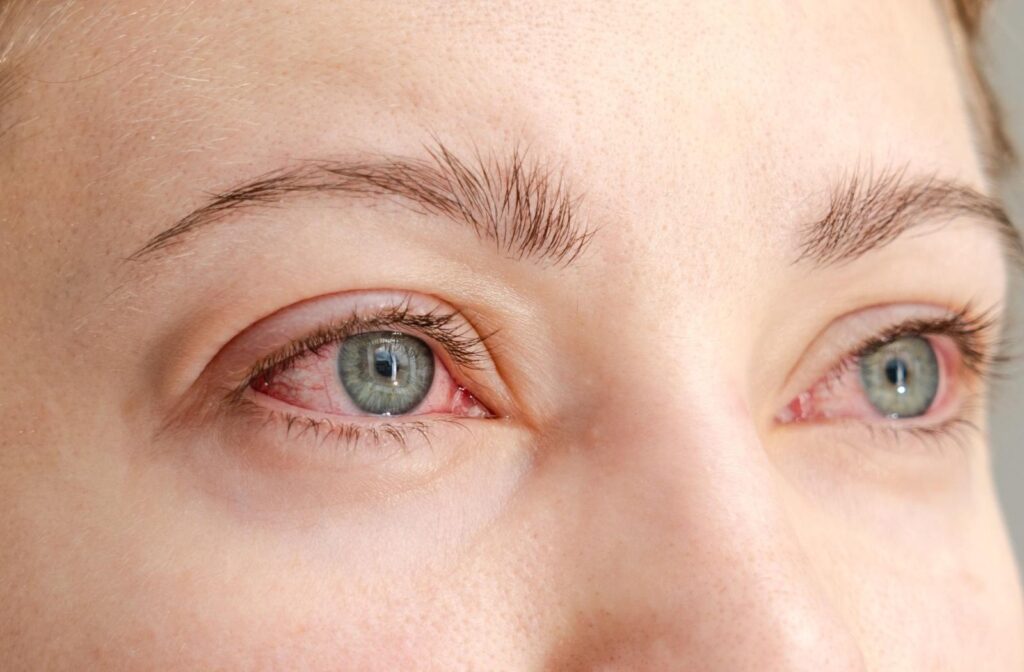
Your eyes feel irritated, watery, and uncomfortable, but you’re not sure why. Both dry eye and allergies can cause similar symptoms, leaving you guessing about the real problem. At Murdoch & Macnab Doctors of Optometry, we know these symptoms can be frustrating and have a real impact on your day. But finding relief starts with knowing which problem you have.
The differences lie in specific symptoms and timing: Dry eye creates a gritty, burning sensation that’s fairly consistent year-round, while allergies produce intense itching and often follow seasonal patterns. A comprehensive eye exam can accurately identify which condition you’re experiencing.
Common Symptoms: Where Dry Eye and Allergies Overlap
Both conditions share frustrating symptoms that can make your daily routine uncomfortable. Whether you have dry eye or allergies, you might experience these overlapping symptoms:
- Excessively watery eyes as your body tries to compensate for irritation
- Red, bloodshot eyes that create that tired, strained look
- Scratchy, uncomfortable sensations
This overlap explains why many people struggle to identify their specific issue without professional help.
Key Signs That Point to Dry Eye
Physical Symptoms You’ll Notice
Dry eye creates a distinctive gritty, sandy feeling, as if a small particle is stuck under your eyelid. You might feel a burning sensation that builds over the course of the day, especially during tasks that require focus.
Your vision may blur temporarily, but it clears when you blink. This happens because your tear film isn’t coating your eye surface properly, causing light to scatter rather than focus clearly.
When Symptoms Appear
Dry eye discomfort often worsens in air-conditioned offices, heated cars, or anywhere with moving air. Though symptoms may worsen with certain weather changes, such as dry air in the winter or intense heat in the summer, they will typically remain consistent year-round.
Screen time can make symptoms more bothersome because you blink less frequently while concentrating. The 20-20-20 rule can help reduce eye strain during extended screen use. Wind, fans, and hair dryers can also intensify your discomfort.
Key Signs That Point to Eye Allergies
Distinct Allergy Symptoms
Eye allergies cause intense itching that isn’t usually common with dry eye irritation. The more you rub, the worse the itching becomes, creating a frustrating cycle.
Your eyelids may swell and appear puffy, especially in the morning. You might also notice clear, stringy discharge that’s different from normal tears.
Timing and Triggers
Allergy symptoms follow predictable seasonal patterns, often peaking during the spring pollen season or fall ragweed blooms. Outdoor activities like gardening, hiking, or sports can trigger immediate reactions.
Your eye symptoms often pair with sneezing, a runny nose, or throat irritation. This combination strongly suggests allergies rather than dry eye.
Dry Eye Treatments Your Optometrist May Recommend
At-Home Relief Options
Warm compresses designed specifically for dry eye can help improve the flow of oil from the tiny glands lining your eyelids. Proper warm-compress technique can help relieve your symptoms when used consistently.
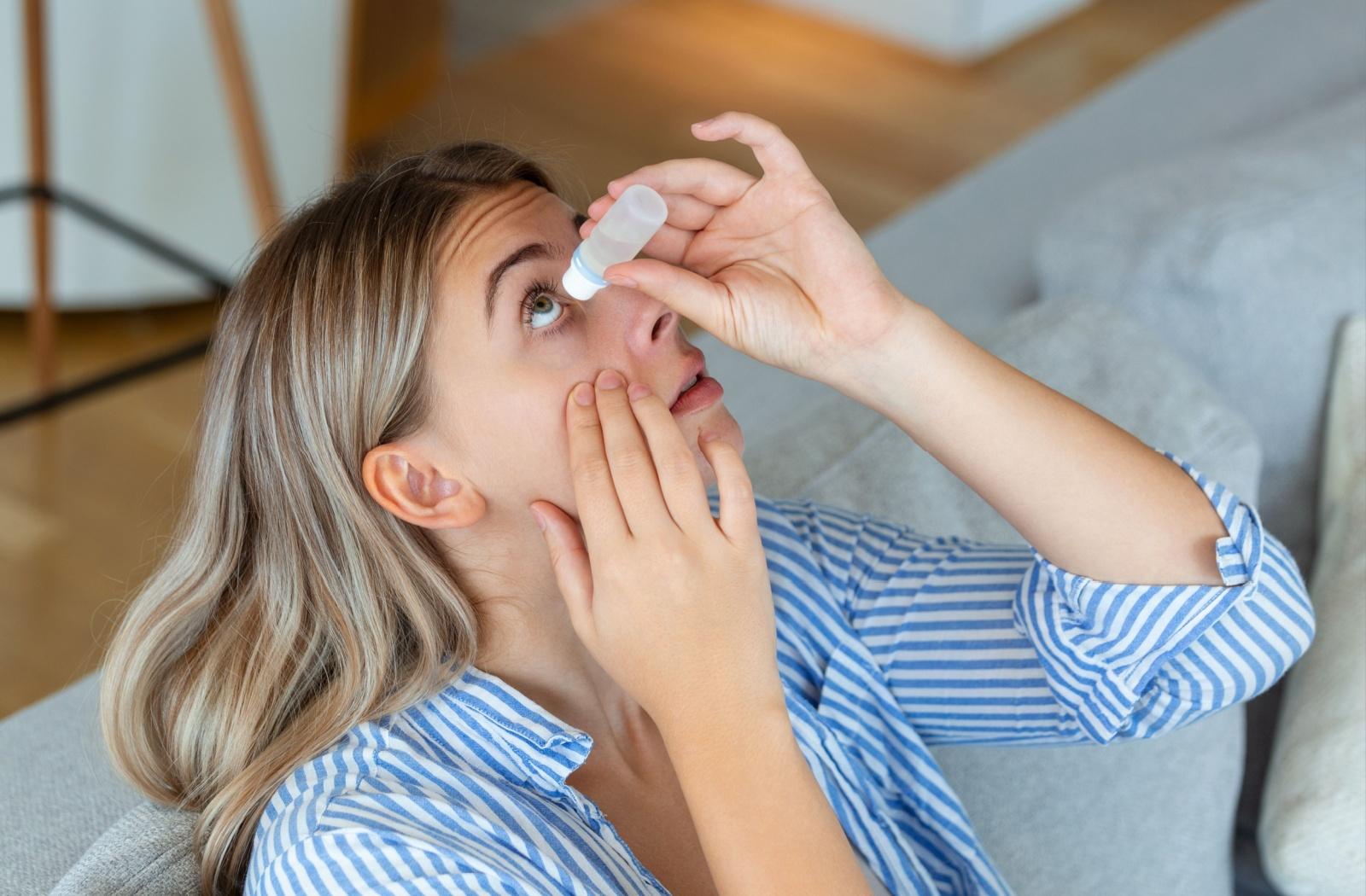
Regular gentle eyelid scrubs can help remove buildup that can worsen dry eye symptoms. Quality artificial tears can also provide longer-lasting moisture than basic drugstore options.
Why Choose Professional Eye Drops
Professional eye drops are designed to target underlying causes, so they can often provide longer-lasting relief than over-the-counter options.
When to See an Optometrist
Home treatments, when used consistently, should begin to provide you some relief within a few weeks. If your symptoms persist despite using warm compresses, practicing eyelid hygiene, and using quality artificial tears, it might be time for a professional evaluation.
Urgent Situations
Vision changes that accompany intense eye discomfort need prompt attention. Blurred vision that doesn’t clear with blinking, light sensitivity, or pain may indicate more serious conditions, so in those cases, it may be a good idea to seek out emergency eye care.
Schedule Your Appointment
Our team at Murdoch & Macnab Doctors of Optometry are here to provide an accurate diagnosis and targeted solutions for both dry eye and allergies. Stop putting up with the symptoms: Schedule your comprehensive eye exam and find the relief you need today.