Key Takeaways
- Myopia, or nearsightedness, happens when the eye grows slightly too long, and that change stays.
- Glasses, contacts, and laser surgery can correct blurry distance vision, but they don’t undo the change in eye shape.
- Myopia control treatments can help slow how quickly a child’s prescription climbs.
- Options include myopia control glasses, soft contact lenses, ortho-k lenses, and low-dose atropine drops.
- Yearly eye exams help track prescription changes during the fastest growth years.
Why Blurry Distance Vision Raises This Question
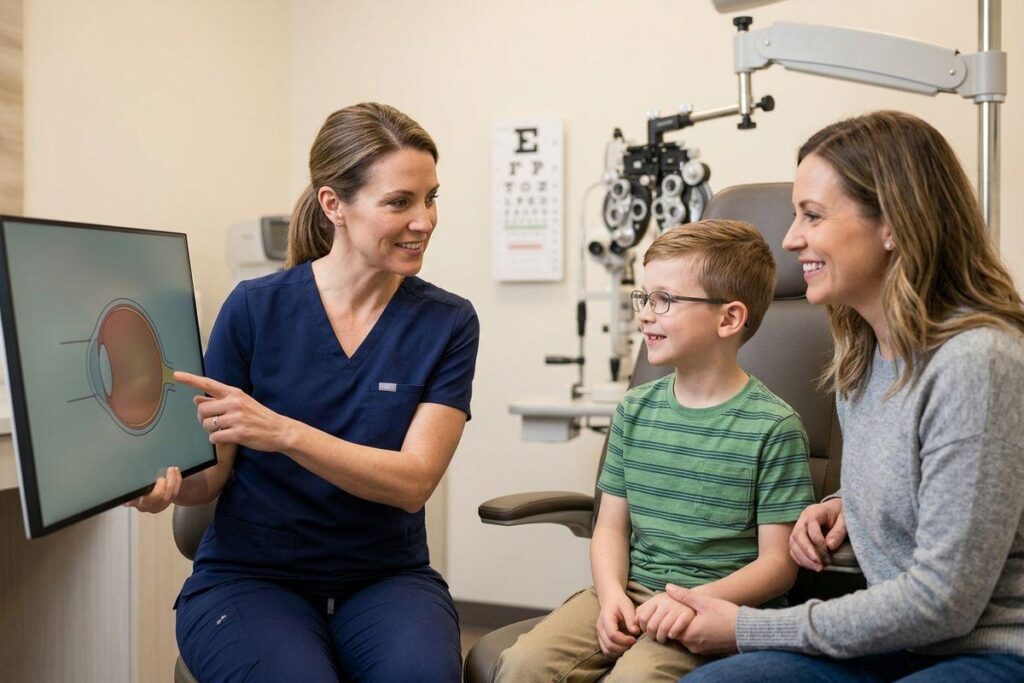
Your child holds a book almost against their nose. They slide closer to the TV, squint at the whiteboard, and mention headaches after school. Once the word “myopia” comes up at an eye exam with Murdoch and Macnab Doctors of Optometry, the next question usually follows fast. Can it be fixed for good?
Unfortunately, myopia can’t be reversed. However, it can be corrected, and its progression can often be slowed in children. This distinction is important, because high levels of myopia can affect a person’s eye health for decades, even if it’s corrected with glasses.
What Myopia Really Means for Your Eyes
With myopia, close-up objects look clear, while anything at a distance looks soft and fuzzy. The reason for this has to do with the shape of the eye. A myopic eye has grown too long from front to back, which causes it to focus light incorrectly.
Myopia often shows up between ages 6 and 12, then tends to progress up until early adulthood, while the body is still growing. Prescriptions can change quickly during this period, so regular children’s eye exams are important.
The Short Answer: Myopia Can Be Corrected, Not Cured
Once an eye has grown longer, it doesn’t shrink back. That change in length stays, and no treatment returns the eye to its original shape. Because of this, myopia can’t be cured.
However, myopia can be corrected. Glasses and contact lenses are common options that change how light reaches the eye so that it focuses correctly. This keeps your vision clear while you’re wearing corrective eyewear.
Does Laser Surgery Count as a Cure?
Laser vision correction reshapes the cornea, the clear front surface of the eye. However, while this procedure does result in clear vision, the eye remains too long from front to back. A person who gets laser surgery therefore still has the risk factors associated with myopia.
What About Diet or Eye Exercises?
No food, supplement, or eye exercise routine can undo myopia. However, a good diet is always a great way to support your health. A diet filled with leafy greens, fish, and colourful vegetables supports general eye health over a lifetime.
Why Slower Progression Matters More Than a Cure
Higher levels of myopia are linked to a greater chance of eye conditions later in life, including retinal problems, glaucoma, and cataracts. The longer the eye grows, the more its internal tissue stretches.
That’s why, instead of chasing a cure, myopia control aims to reduce the rate at which a child’s myopia gets worse. By slowing progression now, we can help children reach adulthood with better vision than they’d otherwise have. This supports their vision through their 40s, 50s, 60s, and beyond, and it makes eye disease management simpler down the road.
Myopia Control Options for Kids and Teens
Lenses Designed to Slow Progression
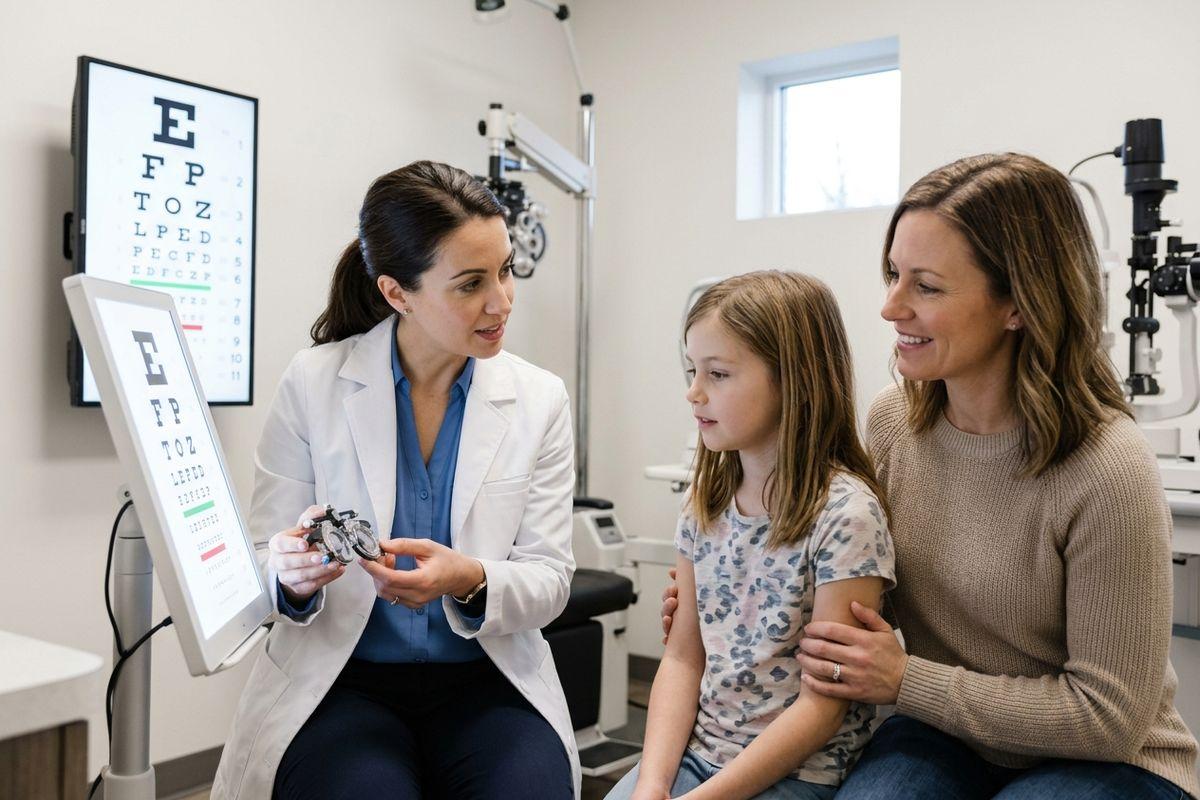
Myopia control glasses look just like regular glasses, but the lenses have a special design that signals the eye to slow its growth while also keeping distance vision clear.
Soft myopia contact lenses work on a similar principle and suit kids who play sports or simply prefer life without frames. Ortho-k lenses are worn overnight, gently reshaping the cornea while your child sleeps, then removed each morning for clear vision through the day.
Low-Dose Atropine Drops
Low-dose atropine can help slow myopia’s progression and is often paired with regular glasses or contact lenses.
Daily Habits That Support Treatment
Habits alone can’t stop myopia, but you can help control your child’s risk:
- Aim to have them spend about two hours of outdoor time daily. This has been shown to reduce myopia risk.
- Put daily limits on screen time and other close work.
When to Book an Eye Exam in Saskatoon
The following behaviours are all signs that your child may be developing myopia:
- Squinting to see objects at a distance, or tilting the head to see better
- Sitting very close to screens, books, or the TV
- Headaches, tired eyes, or rubbing after schoolwork
- Losing interest in activities they used to enjoy
If you’ve noticed some of these signs in your child, request an appointment with our team at 8th Street Vision Centre today. The earlier myopia is addressed, the better we can protect your child’s vision.